
Esther part 6 (Chapter 5) – “A Living Sacrifice”
Are you living your life as a living sacrifice for the glory of God and the advancement of His Kingdom; or are you living your life trying to sacrifice others for your glory and the advancement of your kingdom?
A Living Sacrifice
- ““Go, gather all the Jews to be found in Susa, and hold a fast on my behalf, and do not eat or drink for three days, night or day. I and my young women will also fast as you do. Then I will go to the king, though it is against the law, and if I perish, I perish.”” Esther 4:16 ESV
- If I perish, I perish. With those words, we can say that Esther offered herself a living sacrifice because that’s exactly what she was doing. She was willing to sacrifice her life to go before the king and plead for her people.
- “I appeal to you therefore, brothers, by the mercies of God, to present your bodies as a living sacrifice, holy and acceptable to God, which is your spiritual worship.” Romans 12:1 ESV
- Now, it’s an interesting verse here because it doesn’t say you should live sacrificially. It says you should present yourself a living sacrifice and there’s a big difference. Living sacrificially is noble, but you remain in control of your life. You decide when you’re going to sacrifice what you’re going to sacrifice and for how long. If you’re a living sacrifice, you’ve given up control. God is the one in control telling you what to do when and for how long?
- Jesus was not able to be our substitute by living sacrificially, He had to die and be a sacrifice.
- There’s a real sense that the moment Esther determined to go before the king, she perished, her hopes her dreams or plans or priorities, everything that had previously been Esther perished.
- God brought Esther to this question, “Esther, will you give up your life for Me, for what I’m calling you to do?” That’s the question Esther had to answer. This question is not just intended for Esther. But in a very real sense we are posed the same question by Jesus Himself.
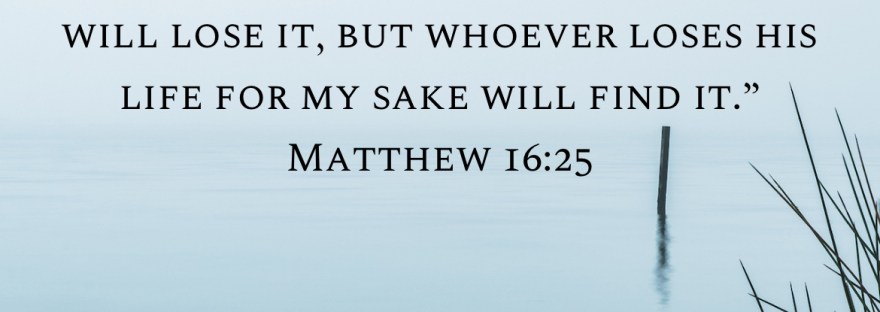
- “Then Jesus told his disciples, “If anyone would come after me, let him deny himself and take up his cross and follow me. For whoever would save his life will lose it, but whoever loses his life for my sake will find it.” Matthew 16:24-25 ESV
- There’s not a single follower of Christ who doesn’t need to do these three things deny, die and follow.
- So what did Esther do and what should we do?
Prayer and fasting.
We saw at the end of chapter 4 Esther calls for a three day fast. The reason she prays first is because she needs to know how to approach this dangerous situation. She needs some divine insight in a difficult problem. Esther knows she needs God’s help to die to herself, so she goes to God in fasting. Esther wasn’t going to just operate on human viewpoint and human perspective.
Take a step of faith.
I believe that Esther knew she had been called to go before the king; she had to take a step of faith. So, she prayed to discern how to approach the king, not if she was supposed to approach the king. There’s a real sense that as believers we already know what we’ve been called to do, now we pray and fast to see how we are to do it. The important truth to get here is that after the period of fasting, there was no failure to launch with regard to Esther. What she said she would do, she did. She put on her robes, she squared her shoulders, and she made her way to the throne room. People who hope to be used by God must boldly put themselves in a position where God can work through them, rather than sitting back, doing nothing, passively hoping or waiting for God to do something.
How often do we decide to pray about something not because we are still trying to discern the good we should do but because we are delaying? Perhaps we say, “Let me pray about that,” but then we keep praying and keep praying and never arrive at a decision or take action. Esther did not postpone following through with her commitment. There was no more reluctance or rationalizing, just resolve.
Strategic, intentional urgency.
Esther was alive, she had the king’s attention, and she could plead her case on behalf of her people. But just as we think she will ask for freedom from the edict, she . . . invites him to a feast . . . with Haman! She had a plan. That the meal was already prepared reveals two things: Esther was really hopeful she would live, and Esther had a plan, she was being intentional. Esther knew what she was trying to do, she had prayed and fasted, and I believe received God’s help and now she was going to do everything she could to carry out and achieve the objective. She dressed and acted like she was supposed to, she knew the king and treated him in a way that would benefit her objective. She was also urgent. She called for the 3 day fast, that happened, and she acted and went in to see the king and invited him to a party that day and then the next day. It was strategic urgency.
Living for self.
- Haman is a case study in what happens in our hearts when our idols are challenged. He had made power and public recognition his idol, and the result was that as long as he was receiving admiration, he felt great. However, when his idol was challenged, he responded by lashing out in anger.
- “And Haman went out that day joyful and glad of heart. But when Haman saw Mordecai in the king’s gate, that he neither rose nor trembled before him, he was filled with wrath against Mordecai.” Esther 5:9 ESV
- Haman’s whole world revolved around his fragile ego. When it was stroked (the invitation to Esther’s party), he felt blessed, even though nothing in the real world had actually changed. His power had not actually increased, yet Haman rejoiced. Likewise, when his ego was hurt (Mordecai’s refusal to honor him), he felt wrath, even though his power was not really diminished by Mordecai’s refusal to bow, yet Haman was incensed by it.
- His joy and his anger were simply the outward expressions of his heart’s idolatry.
- Our hearts face the same temptation to bow to idols. What is it that causes us to be angry out of all proportion to the offense? There is a clue that one of our idols is being threatened. What is it that makes us feel an unusually strong sense of achievement? It may be one of our idols being stroked. Our strong emotions are clues enabling us to read our own hearts better.
- I want us to notice one more thing about Haman. Notice how fickle and how vain he is.
- “Yet all this is worth nothing to me, so long as I see Mordecai the Jew sitting at the king’s gate.”” Esther 5:13 ESV
- Haman is second in power in the whole Persian empire but that’s not enough to him, because one man fails to bow and show him reverence. Doesn’t that seem like a bit of an overreaction? Nothing about Haman has changed in regard to his identity, power, position, or wealth. Mordecai’s not acknowledging him changes nothing of who Haman is. Because this one thing was out of alignment, which didn’t really impact anything significant in his life, other than his pride, Haman was prepared to throw everything else away, and nothing else mattered until he could fix that one thing.
How are you living?
- We’re probably not at the Haman level of plotting the eradication of an entire people group. But might we sometimes be guilty of the same kind of fickle misaligned priorities?
- “Yeah, I know that God has eternally saved me from certain sin and death and an unthinkable and unimaginable hell that I deserve. I know that He sent His very son to bleed and die in my place. I know that I’ve been given the Holy Spirit of God. All that means nothing to me so long as… fill in your job problem, fill in your family problem fill in the government problem, financial problem, culture problem, society problem, etc…”
- How our joy can be robbed so quickly by changing circumstance when the reality is no matter how the circumstances change, our identity in Christ does not change; our position, our power, our value, or our security do not change. We should be the most joyful people on the planet, the most secure people regardless of the circumstances that surround us.
- Is it possible, that we could be letting certain earthly disappointments or circumstances cloud our view of the massive truth which should define us, our identity, our security in God, our inheritance in Jesus Christ?
- Here’s a passage that is a description of our eternal inheritance that awaits us in Jesus, and I pray, and I hope that this would be an encouragement to you, regardless of what you’re facing, to remember, it ends well for you in Jesus.
- “Blessed be the God and Father of our Lord Jesus Christ! According to his great mercy, he has caused us to be born again to a living hope through the resurrection of Jesus Christ from the dead, to an inheritance that is imperishable, undefiled, and unfading, kept in heaven for you, who by God’s power are being guarded through faith for a salvation ready to be revealed in the last time. In this you rejoice, though now for a little while, if necessary, you have been grieved by various trials, so that the tested genuineness of your faith—more precious than gold that perishes though it is tested by fire—may be found to result in praise and glory and honor at the revelation of Jesus Christ.” 1 Peter 1:3-7 ESV
- May we be people who filter our experiences and our circumstance through the lens of this identity, of this great inheritance.
- Nothing speaks more to your significance than God the Father caring enough to be involved in your situation and sending God the Son to lay down His life in your place and then to empower you with His Spirit for the purposes of the kingdom. Calling and empowering you to be a living sacrifice for His glory and the advancement of His Kingdom.
Questions:
- What are your thoughts on the difference between sacrificial living and being a living sacrifice?
- What does it look like on an “average” day to deny yourself, pick up your cross, and follow Jesus?
- Have you ever used prayer for delaying rather than obeying? If so, why? How can we minimize this tendency in our lives?
- Do your “strong” emotions reveal any idol in your life? In what ways can we feed idolatry in our lives rather than starving it?
- Through what lens are you viewing life; through the lens of worldly chaos and uncertainty or through the lens of who God is, what He says about you, and the security and certainty of His Word?

 Living Hope Ministries